
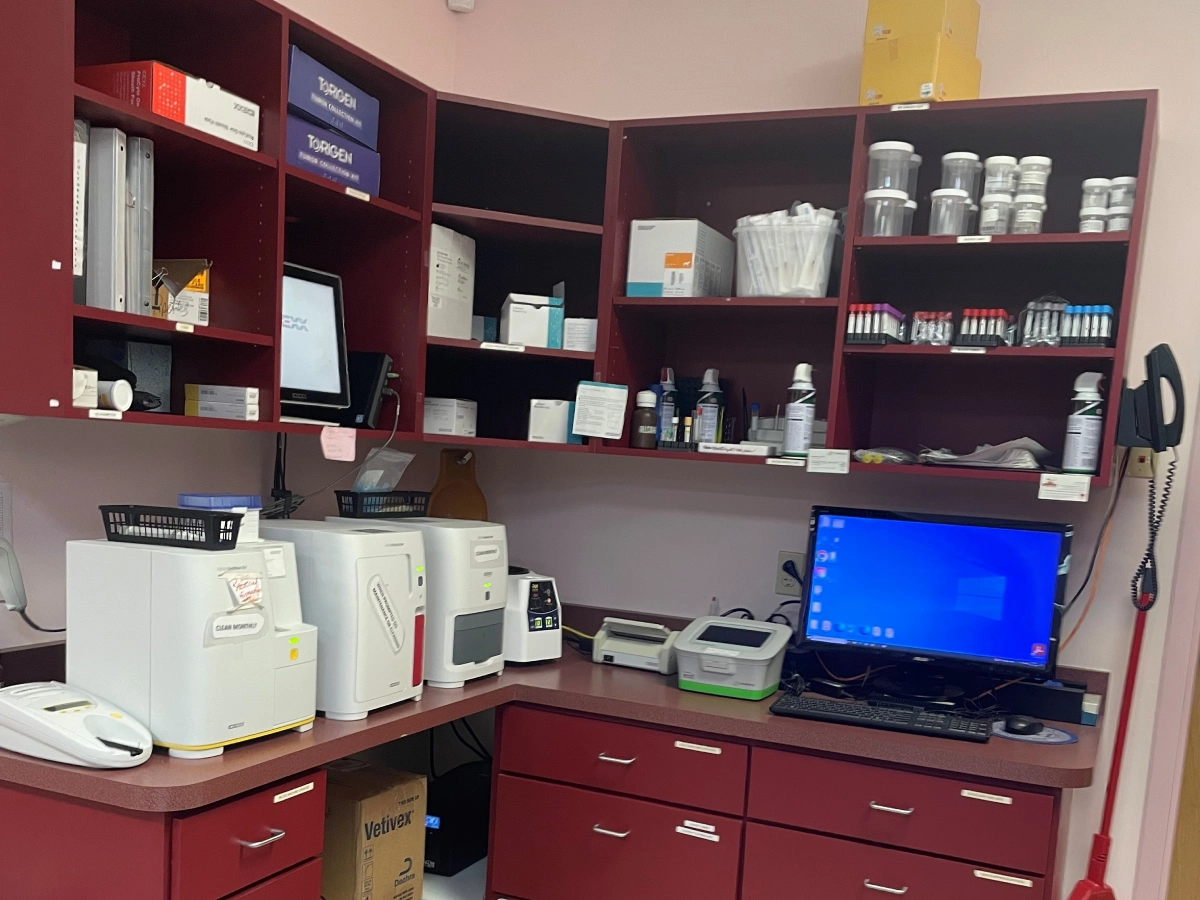
Pet Laboratory Testing in Port Orange, FL
Our in-house lab at Halifax Veterinary Center provides fast, accurate veterinary diagnostics for dogs and cats across the greater Daytona Beach area. When your pet is unwell, timely pet blood testing helps our doctors find answers and start the right treatment sooner.
What Is Pet Laboratory Testing?
Laboratory testing gives our veterinarians a window into your pet’s health that a physical exam alone can’t provide. By analyzing blood, urine, and other samples, we can detect problems affecting the organs, blood, and immune system—often before outward symptoms appear.
When your pet becomes suddenly ill or faces an emergency, quick results matter. Our in-hospital laboratory equipment can produce many test results within minutes, so our doctors can make informed decisions without delay. For us, that speed means less waiting and worry for you, and faster care for your pet.
Our Diagnostic Capabilities
We run a wide range of tests right here in our clinic, and we’ll always explain which ones matter most for your pet. Baseline testing for a sick pet may include:
- Blood cell counts: Changes in white cells, red cells, and platelets can point to anemia, dehydration, infection, autoimmune disease, or certain cancers.
- Blood chemistry tests: These assess liver and kidney function, blood sugar, proteins, calcium and phosphorus, and pancreatic function.
- Electrolyte tests: Sodium, potassium, and chloride levels can go awry with dehydration or fluid loss from vomiting or diarrhea, guiding whether IV fluids are needed.
- SNAP tests: These point-of-care tests quickly screen for infectious diseases such as feline leukemia, feline immunodeficiency virus, canine parvovirus, giardia, and leptospirosis.
- Coagulation tests: These detect clotting disorders, which can appear with certain rodenticide poisonings and severe liver disease.
- Microscopy: Microscopic evaluation of blood, urine, skin and ear samples, and needle biopsies helps us diagnose systemic, urinary, skin, and ear conditions, and tell benign growths from cancerous ones.

Including you in your pet’s care matters to us, so please never hesitate to ask questions as we walk through the results together.
How Diagnostic Testing Works
When your pet is sick or injured, they can’t tell us what’s wrong—so we start with a thorough physical exam and the history you share about what you’ve noticed at home. If the cause isn’t immediately clear, your veterinarian will recommend targeted tests to narrow it down.
Depending on your pet’s needs, this may involve:
- Blood and urine testing: Samples may be run on-site for immediate answers, or sent to a reference laboratory when a test can’t be performed in-house, or results aren’t urgently needed.
- Diagnostic imaging: Tools like X-rays and ultrasound help our doctors evaluate the heart and lungs, detect obstructions or internal masses, identify fluid in the chest or abdomen, and assess bones and joints. Gentle restraint usually works, though some pets need light sedation.
- Microscopy: Ear swabs, skin samples, and biopsies viewed under the microscope help diagnose skin and ear conditions.
- Eye testing: Specialized tests measure tear production, check for corneal injuries, and evaluate pressure inside the eye.
Diagnostic testing is a key step in building an effective treatment plan. It lets your veterinarian target the underlying problem directly and understand how best to help your pet recover.

Answers You Can Trust, Right Here at Our Clinic
Having a full laboratory on-site is one of the things that sets our practice apart. Our in-house blood analysis equipment, imaging tools, and experienced team let us move from question to answer quickly, often during the same visit. That’s especially valuable during an emergency, when every minute counts. When more specialized testing is needed, we partner with trusted reference laboratories to give your pet complete, coordinated care.
FAQs About Pet Laboratory Testing
Why does my pet need lab work if they seem healthy?
Baseline testing during a wellness exam establishes what's normal for your pet, making it easier to spot changes over time. It can also uncover hidden issues before they cause obvious symptoms.
How long do results take?
Many of our tests are run in-house and can produce results within minutes. Some specialized tests are sent to an outside lab, which may take a bit longer—we'll let you know what to expect.
Will my pet need to be sedated for testing?
Usually not. Most samples are collected with gentle handling. For some imaging or uncomfortable procedures, light sedation may be recommended for your pet's comfort and safety.
Do I need to fast my pet before bloodwork?
Sometimes. Certain tests are more accurate on an empty stomach. When fasting is needed, our team will give you clear instructions ahead of your visit.
Faster Answers for Better Care
When your pet isn’t feeling well, waiting for answers is hard. Our on-site laboratory and imaging capabilities let our experienced team diagnose problems quickly and accurately, so treatment can begin without unnecessary delay. For dogs and cats throughout our coastal community, in-house veterinary diagnostics mean thorough, timely care from a team that treats every patient like family.